

I can’t remember when my love of books began, but I know I already loved books when I was six-years-old. First grade was a good year for me. I learned the difference between the cycle in bicycle and the sicle in popsicle. I learned to accept friendship when it was offered, even if it didn’t come from the people I was trying to befriend. I learned what it was like to lose, and win. But one of the most impressive (as in, it was impressed upon me) lessons of the year was a lesson about books.
My elementary school had three first-grade classes, and we all came together for this lesson. We sat on the floor in one classroom and exploded with excitement as one of our teachers rolled a television set into the room. I don’t remember exactly how I felt as the movie progressed, but one scene still haunts me: a group of stop-motion animated books talking about their lives. Most of them looked quite normal, but one book was ragged. He was water-stained and ripped, dirty with greasy food, his cover chewed on. As he told his life story to the other books I became very emotional. Then, in front of the entire grade, I began to cry. The last thing I remember before my teacher took me out of the room was that children in the movie were throwing the worn book around, their hands covered with jam.1
I was distraught; I sobbed for minutes and, if I remember correctly, hugged my teacher, who explained to me over and over that the movie was just pretend. It was a story. The books weren’t real. They weren’t alive. The tattered book, he hadn’t really experienced any of those things because he didn’t exist.
I understood what she was saying, and I appreciated her effort, but I knew the truth. Books had experienced those things. Hundreds of books had. Since the inception of the book, they had been colored on, spilled on, broken, bent, burned, drowned, and mutilated. And I didn’t like it.
I don’t know much about psychology, but I don’t have to know much to know that this experience was memorable and defining. At six years old I was brought to tears by the thought of a bunch of paper being ripped up and ruined.
At that point, I didn’t understand the real joy of books, having had very little reading experience, but by the end of second grade, I was reading all the time, spurred on by my parents who offered me a penny for every page read (I earned ten dollars before they decided it was getting a bit too pricey), and I had decided that books had a lot more to offer than I had ever imagined.
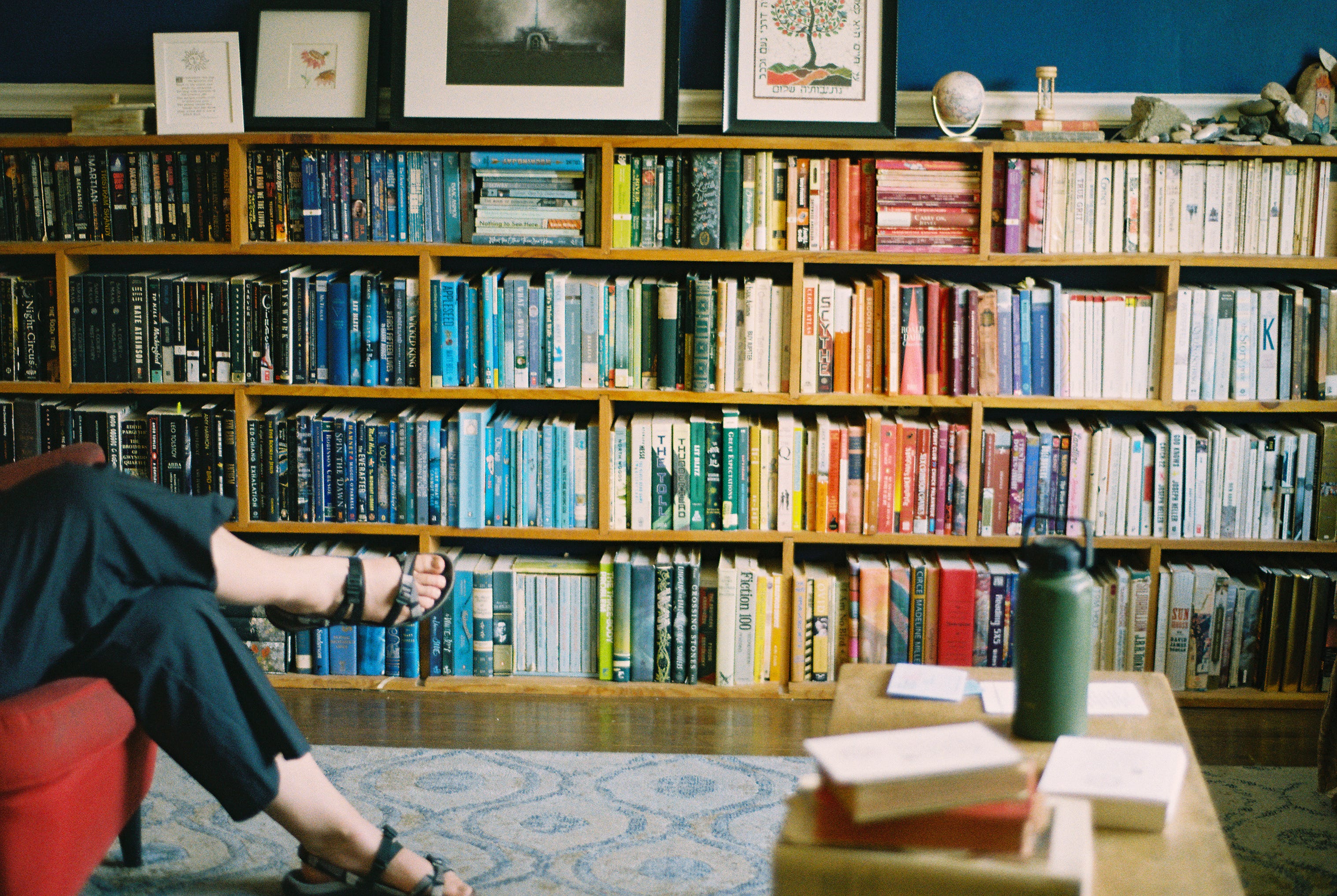
When I think back, I can’t count the number of experiences books have given me. I have been to worlds beyond this one, worlds that don’t even exist. I have been all ages and sexes. Have spoken many languages and experienced what it is like to belong to races other than my own, both earthly and otherworldly. I have poached pheasants, sailed ships, been wounded in
battle. I have been taken into the center of a tornado and dropped, whole and alive, onto the ground miles away. I have sought marriage in seventeenth-century England, survived the firebombing of Dresden in more ways than one, worn a spacesuit, and (horrifically2) had my feet bound in Imperial China.
When I was in first grade I learned that books were alive, that they had feelings and needed to be treated well, later I learned that they could grab hold of me and demand my attention. A book could hold onto me so tightly that the only way to escape was to finish reading it, somehow breaking the gravitational spell it had cast. I learned that books could communicate complex ideas and emotions that would take time to fully comprehend, and, to me, most importantly, I learned that they could help me understand and process my own experiences.
I have spent transcendent moments reading, moments where an author has perfectly captured my own feelings in a way that helped me understand and define them. One of the moments was when, as a young adult reading C.S. Lewis, I read, “It was when I was happiest that I longed most...The sweetest thing in all my life has been the longing...to find the place where all the beauty came from.”3
This completely explained a feeling I had come to know, but could not express. I now wonder if I could have ever understood or recognized that feeling without reading about it first, or if I would have experienced it always through a haze, living without awareness of my own self.
Many years later, I read another book that helped me further understand that same idea and added a new dimension to it. “There are two occasions,” writes Marilynne Robinson, “when the sacred beauty of Creation becomes dazzlingly apparent, and they occur together. One is when we feel our mortal insufficiency to the world, and the other is when we feel the world’s mortal insufficiency to us.”4
Processing the world is challenging. And sometimes it seems like I don’t have the ability to fully comprehend the smallest part of which I feel.
Books, good books that take that task seriously, have helped me understand parts of myself that I never would have recognized without them. They have helped me understand the world. They have helped me understand the people I care about, the people I admire, and the people I fear. They have helped me imagine and conceptualize how worlds could exist beyond mine, greater worlds that dazzle me with their “sufficiency.”
I know it is common for writers to write about books and reading. Writers love reading, that’s part of the reason they write. But as often as reading has been celebrated in odes and novels and essays across the globe, I still feel the desire to add my voice to the chorus and say loud and clear that books are alive and real. They are the friends who never leave me when I need them; they are never too busy to be read, or too tired to offer advice. For that, I will always love them.
If you also love books, consider preordering my new book on Kickstarter through Friday (August 14th).
In looking for this movie as an adult, I have found several other people who also remember it. It seems like I wasn’t the only one: https://www.reddit.com/r/tipofmytongue/comments/e4s9uj/tomteducational_video1990sbizzare_puppet_video
As an adult, this is one of the few reading experiences that has actually given me nightmares: Snow Flower and the Secret Fan, by Lisa See.
This quote is from Till We Have Faces, one of my favorite C. S. Lewis books.
And this quote is from Gilead, a beautiful novel that I will forever love.
I remember when you were 3 yrs old, you had memorized most of Hop on Pop. You would get your 2 yr old brother next to you and " read it to him."
I wish we had had cell phone cameras back then. We've missed some old priceless moments.